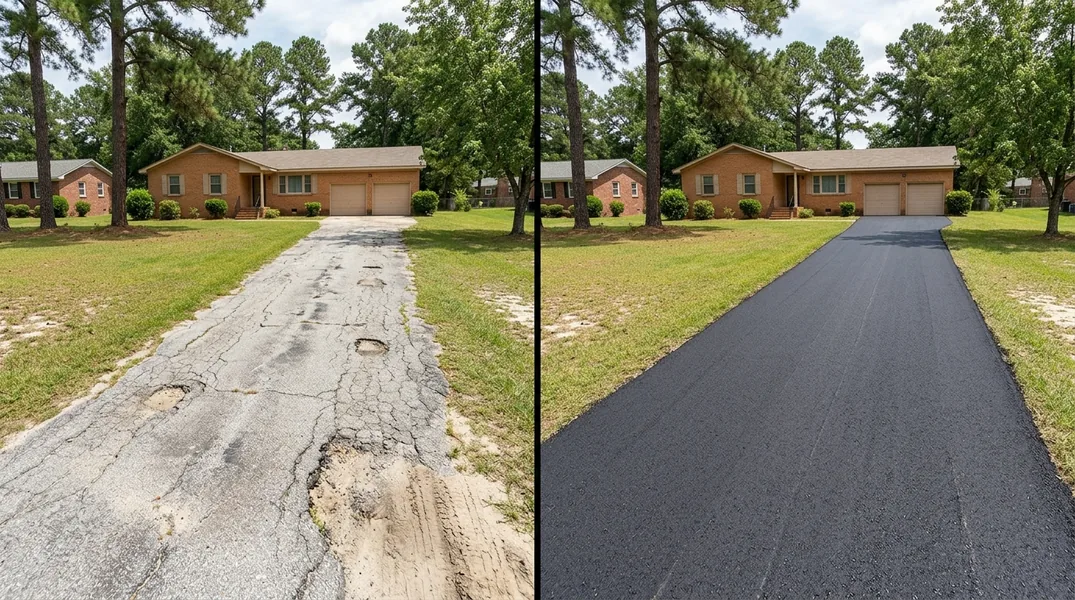
Understanding Fayetteville's Sandhills Soil and Its Impact on Driveways
Fayetteville sits in North Carolina's Sandhills region, a geological area characterized by sandy, loose soil with relatively poor load-bearing capacity compared to clay or compacted earth found elsewhere in the state. This unique soil composition directly affects how driveways perform over time, regardless of whether you choose asphalt or concrete. The sandy foundation shifts slightly with temperature changes and moisture fluctuations, creating stress on any surface installed above it.
When homeowners in Fayetteville plan a new driveway, understanding local soil conditions is crucial to making an informed decision. A driveway built on inadequate base preparation will fail prematurely, costing you thousands in repairs. The Sandhills environment demands either superior base preparation or a material choice that naturally accommodates minor settling. This is where asphalt and concrete diverge significantly in their real-world performance.
Asphalt vs. Concrete Driveway: Key Differences for Sandy Soil
The comparison between Asphalt Driveway Paving & Installation and concrete comes down to flexibility, durability, and how each material responds to soil movement. Asphalt is a flexible material composed of bitumen and aggregate that can flex slightly as the ground beneath shifts. Concrete, by contrast, is rigid and unforgiving. When sandy soil settles unevenly, concrete cracks; asphalt flexes and absorbs the movement without structural failure.
For homeowners in the Sandhills, this flexibility is a major advantage of asphalt. A properly installed asphalt driveway can tolerate minor soil settling that would cause concrete to develop visible cracks within a few years. Additionally, asphalt requires less initial excavation and base preparation than concrete, which means lower upfront costs and a faster installation timeline. However, concrete offers a longer visual lifespan and requires less frequent surface maintenance in the early years, though repairs can be more expensive when they do occur.
Another critical difference is how each material handles water drainage. Asphalt naturally sheds water more effectively than concrete, which is important in Fayetteville's climate where spring rains and occasional summer storms are common. Concrete can absorb water into micro-cracks, leading to freeze-thaw damage during winter months. Asphalt's water resistance makes it particularly well-suited to the region's weather patterns.
Asphalt Driveway Lifespan in Fayetteville's Climate
The asphalt driveway lifespan typically ranges from 15 to 20 years when properly installed and maintained, though this can extend to 25 years with excellent care. In Fayetteville's climate, which includes hot summers and occasional ice events, a well-maintained asphalt surface performs reliably throughout its expected life. The key to maximizing longevity is regular maintenance, including seal coating every two to three years and prompt Driveway Repair when small issues appear.
Concrete driveways, while often marketed as lasting 30 to 40 years, frequently develop structural problems much sooner in sandy soil environments. Cracking typically begins within 5 to 10 years, and while concrete doesn't necessarily fail completely, the visual deterioration and potential trip hazards become problematic. Repairs to concrete are also more invasive and expensive, often requiring removal and replacement of entire sections. When you factor in the total cost of ownership over 20 years, asphalt often proves more economical for Sandhills homeowners despite its shorter nominal lifespan.
Asphalt Over Concrete Driveway: A Middle Ground Option
Some homeowners ask whether asphalt over concrete driveway installation is a viable option, and the answer is yes, but with important caveats. If you have an existing concrete driveway in good structural condition (no major cracks or settling), adding a layer of asphalt on top can extend the life of your driveway while improving its appearance. This approach is sometimes called an asphalt overlay and can be more affordable than complete removal and replacement.
However, this solution works best when the underlying concrete is stable and properly graded. In sandy soil areas like Fayetteville, if the concrete has already begun to settle or crack due to soil movement, placing asphalt over it is temporary at best. The asphalt will eventually develop the same cracks as the concrete beneath it. A professional inspection is essential before pursuing this option. Fayetteville Asphalt Paving can assess your concrete's condition and recommend whether overlay is feasible or whether complete replacement is the better long-term investment.
Blacktop Driveway Installation: Why Asphalt Works Best for Sandhills Soil
A blacktop driveway is simply another name for an asphalt driveway, and it remains the most popular choice among Sandhills homeowners for good reason. The term 'blacktop' refers to the dark black color of asphalt, which comes from the bituminous binder. Beyond aesthetics, blacktop driveways offer practical advantages specific to sandy soil environments. The material's flexibility accommodates minor ground movement, and its dark surface provides good traction in wet weather while melting ice and snow more quickly than concrete in winter.
Installation of a blacktop driveway requires proper site preparation, including excavation, base layer compaction (typically 4 to 6 inches of crushed stone or recycled asphalt), and then the asphalt overlay itself. While this process is straightforward, quality matters significantly. A poorly prepared base will fail prematurely regardless of asphalt quality. This is why choosing an experienced local contractor like Fayetteville Asphalt Paving is critical. We understand Sandhills soil conditions and ensure proper base preparation to maximize your driveway's durability.
Asphalt Driveway Paving & Installation Cost in Fayetteville: What to Budget
When comparing asphalt and concrete, cost is often the deciding factor for homeowners. Asphalt typically costs between $3 and $6 per square foot for basic installation, while concrete ranges from $6 to $12 per square foot. For a standard 500-square-foot driveway, this translates to roughly $1,500 to $3,000 for asphalt versus $3,000 to $6,000 for concrete. These ranges vary based on site conditions, local labor rates, and material availability in Fayetteville.
However, initial cost is only part of the equation. You must also factor in maintenance and repair expenses over the driveway's lifetime. Asphalt requires seal coating every 2 to 3 years (typically $0.50 to $1.50 per square foot) and occasional Pothole Repair & Asphalt Patching (usually $150 to $500 per repair). Concrete requires minimal maintenance initially but can develop expensive cracks that demand professional repair or replacement. Over a 20-year period, total cost of ownership often favors asphalt, especially in sandy soil where concrete's rigid nature causes premature failure.
To get an accurate estimate for your specific property and needs, contact Fayetteville Asphalt Paving at (910) 900-6633 or request a free estimate. We'll evaluate your soil conditions, existing site conditions, and your budget to recommend the most cost-effective solution for your driveway.
Making the Right Choice: Asphalt or Concrete for Your Fayetteville Driveway
For homeowners in Fayetteville and the surrounding Sandhills region, asphalt is generally the superior choice when soil conditions are considered. The material's flexibility, lower cost, excellent water drainage, and proven performance in sandy soil environments make it the most practical option for most residential driveways. While concrete has aesthetic appeal and requires less frequent maintenance in the short term, its rigid structure makes it vulnerable to the soil settling common in Sandhills areas.
The decision ultimately depends on your priorities, budget, and long-term plans for your property. If you value durability, cost-effectiveness, and proven performance in local soil conditions, asphalt is the clear winner. If you prefer a different aesthetic or plan to sell your home within 5 to 7 years, concrete might be worth considering despite its higher risk in sandy soil. Regardless of your choice, professional installation is essential. Poor installation will doom either material, so partner with experienced contractors who understand Fayetteville's unique geological and climatic conditions. Contact Fayetteville Asphalt Paving today at (910) 900-6633 to discuss your driveway project and learn how we can help you make the best choice for your home.
Looking for a professional asphalt paving contractor in Fayetteville? Fayetteville Asphalt Paving responds fast for all your asphalt paving needs.
Get a Free Quote