Understanding Fayetteville's Sandhills Soil Problem
If you own a home in Fayetteville, you've likely noticed that driveways don't last as long here as they do in other parts of North Carolina. The culprit isn't always poor installation or cheap materials. More often, it's the ground beneath your driveway: the Sandhills soil that dominates our region. This loose, sandy soil is naturally unstable and shifts constantly, especially during freeze-thaw cycles and heavy rainfall.
The Sandhills formation is characterized by highly permeable, fine-grained sand with minimal clay content. While this soil drains well (which sounds good in theory), it also means there's nothing holding it together. When water infiltrates beneath your asphalt, it doesn't compact the base layer like clay-heavy soils do. Instead, it moves through the sand, carrying fine particles away and creating voids. Over time, these voids grow larger, and your driveway loses its structural support. This is why so many homeowners in Fayetteville face premature settling, cracking, and raveling within just five to seven years of installation.
What Happens When Loose Sand Shifts: Settling and Raveling Explained
Driveway settling occurs when the subgrade (the soil base) compresses unevenly or loses volume. With Sandhills sand, settling is almost inevitable because the soil particles are so small and loosely packed. When a heavy vehicle drives over your driveway, it compresses the sand directly beneath the wheels. But the sand on either side doesn't compress equally, creating low spots and depressions. Over months and years, these depressions become visible as the driveway surface sinks in certain areas. You might notice the edges of your driveway are higher than the center, or that water pools in certain spots after rain.
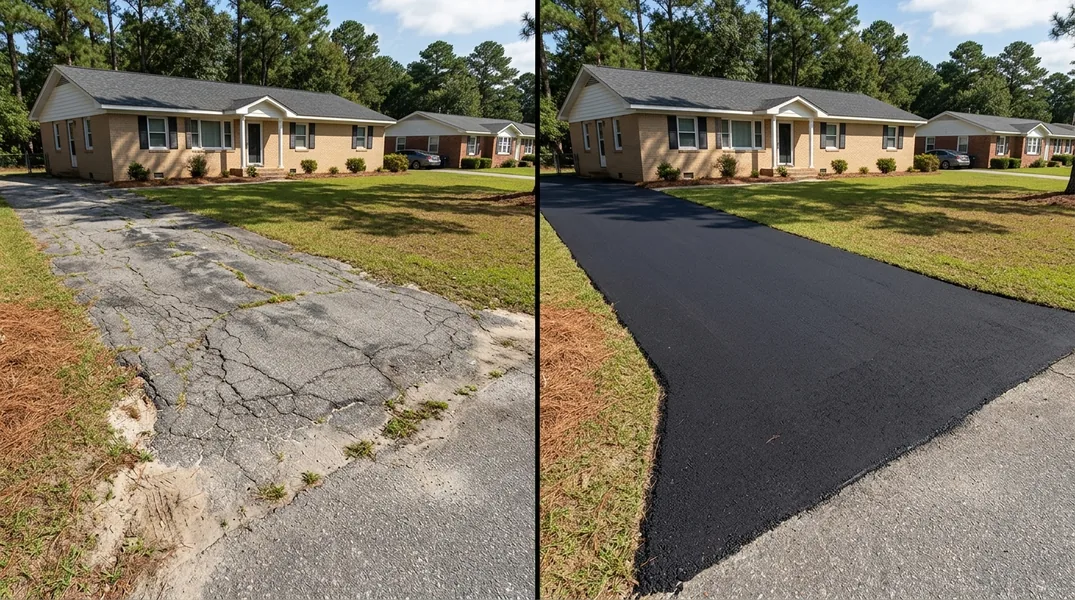
Raveling is a related but distinct problem. It occurs when the asphalt binder (the glue holding the aggregate together) breaks down and the surface begins to shed small stones and debris. In Fayetteville, raveling is accelerated by the movement beneath the surface. As the sandy subgrade shifts and settles, it creates micro-fractures in the asphalt above. Water seeps into these cracks, freezes during winter, and expands, making the cracks wider. The asphalt surface becomes brittle and begins to unravel, especially at the edges. You'll see what looks like the driveway is literally coming apart, with small stones coming loose and creating a rough, crumbly texture. Both settling and raveling are signs that your driveway's foundation is compromised.
Frost Heave and Winter Damage in Fayetteville
Winter in Fayetteville brings another layer of complexity. Although we don't experience the extreme cold of northern states, our freeze-thaw cycles are still damaging, especially when combined with loose Sandhills soil. Frost heave occurs when water in the soil freezes and expands, pushing the surface upward. In spring, the ice melts, and the soil settles back down, but not always evenly. This cycle repeats year after year, and over time, it creates significant stress on your asphalt driveway.
The problem is magnified in our region because Sandhills sand allows water to penetrate deeply. A proper driveway installation includes a compacted base layer and adequate drainage to prevent water from pooling beneath the asphalt. However, if your driveway was installed without proper grading or if the base layer has deteriorated, water will accumulate in the sand. When that water freezes, it expands with tremendous force, lifting the asphalt. When it thaws, the asphalt cracks and settles unevenly. This is why Driveway Repair services are so common in our area, and why many homeowners find themselves dealing with frost heave damage every few years.
Recognizing When You Need Pothole Repair, Asphalt Patching, or Full Replacement
Not all driveway damage requires the same solution. Small cracks and minor surface wear can often be addressed with routine maintenance. However, when settling and raveling are severe, you'll need more aggressive intervention. Pothole Repair & Asphalt Patching are effective for isolated damage, but if settling is widespread across your driveway, patching individual areas is only a temporary fix. The underlying soil problem will continue to cause new damage elsewhere.
The decision between repair and replacement depends on several factors. If your driveway is less than ten years old and the damage is limited to specific areas, patching might make sense. However, if you're seeing settling in multiple locations, extensive raveling, or large potholes, it's time to consider whether Driveway Repair is truly cost-effective. Sometimes replacing the entire driveway with proper base preparation is a better long-term investment. Our team at Fayetteville Asphalt Paving can assess your driveway and recommend the best course of action. Call us at (910) 900-6633 to discuss your specific situation, or request a free estimate so you can understand all your options.
Proper Installation and Base Preparation: The Real Solution
The key to avoiding premature settling and raveling in Fayetteville is proper installation from the start. Asphalt Driveway Paving & Installation in our region requires special attention to base preparation. The subgrade must be properly graded to ensure water drains away from the driveway, not toward it. A well-compacted base layer, typically four to six inches of crushed stone or recycled asphalt, is essential. This base layer must be compacted to at least 95 percent density to provide a stable foundation. Many budget contractors skip or shortcut this step, which is why their driveways fail so quickly in our sandy soil.
Additionally, the asphalt itself should be a quality mix designed for our climate. A thicker wearing surface (at least two inches) helps resist raveling and provides better protection against water infiltration. Some homeowners also benefit from Asphalt Resurfacing & Overlay services, which can extend the life of an existing driveway if the base is still sound. However, if the base has already failed due to poor original installation or years of settling, resurfacing alone won't solve the problem. The foundation must be rebuilt. When you invest in a new driveway, insist on proper base preparation, adequate compaction, and correct grading. The extra cost upfront will pay dividends in durability and performance.
Taking Action: Professional Inspection and Your Next Steps
If you're noticing signs of settling, raveling, or frost heave damage on your driveway, don't wait for the problem to worsen. Early intervention can sometimes prevent the need for complete replacement. A professional inspection from Fayetteville Asphalt Paving can determine whether your driveway can be salvaged with targeted repairs or whether a full replacement is the smarter investment. We'll evaluate the extent of the damage, assess the condition of the base layer, and discuss the best solution for your property and budget.
The reality is that Sandhills soil presents unique challenges, but they're challenges we understand and know how to address. Whether you need emergency Pothole Repair & Asphalt Patching or are planning a new driveway installation, our team has the expertise to deliver results that last. Contact Fayetteville Asphalt Paving today at (910) 900-6633 or request a free estimate to learn more about your options. We serve Fayetteville and the surrounding area, and we're ready to help you protect your investment.
Looking for a professional asphalt paving contractor in Fayetteville? Fayetteville Asphalt Paving responds fast for all your asphalt paving needs.
Get a Free Quote